
About this service
Hair Transplant Repair
Hair transplant repair refers to medical procedures designed to address concerns resulting from previous hair restoration surgery.
These concerns may include insufficient hair density, an unnatural hairline, irregular follicle direction, uneven graft distribution, or visible scarring.
Depending on your condition, corrective options may involve additional hair transplantation, strategic graft placement, selected graft removal or repositioning, or appropriate scar-management procedures.
The recommended approach depends on your previous procedure, scalp condition, donor hair availability, and individual medical assessment.
What Problems Can Hair Transplant Repair Address?
1. Low Hair Density
If your previous transplant resulted in less density than expected, additional graft placement may help improve the overall appearance of hair coverage, provided sufficient donor hair is available.
2. Unnatural Hairline
An improperly designed or poorly positioned hairline can affect facial balance and create an artificial appearance. A corrective assessment can determine whether its appearance can be improved.
3. Incorrect Hair Growth Direction
Hair follicles implanted at unsuitable angles or directions may look different from surrounding natural hair. Selected corrective procedures may be considered depending on follicle positioning and tissue condition.
4. Uneven Graft Distribution
Uneven graft placement can result in areas with inconsistent hair density. A specialist can assess whether further treatment may improve the overall distribution.
5. Visible Scarring
Some patients develop visible scars in the donor or recipient area after previous procedures. Treatment options may be evaluated according to scar type, size, and tissue condition.
6. Unnatural Hair Transplant Results
When the transplanted hairline or overall hair distribution does not complement your natural facial features, corrective treatment may help improve aesthetic balance where medically feasible.
How Does the Hair Transplant Repair Process Work?
Step 1: Comprehensive Medical Assessment
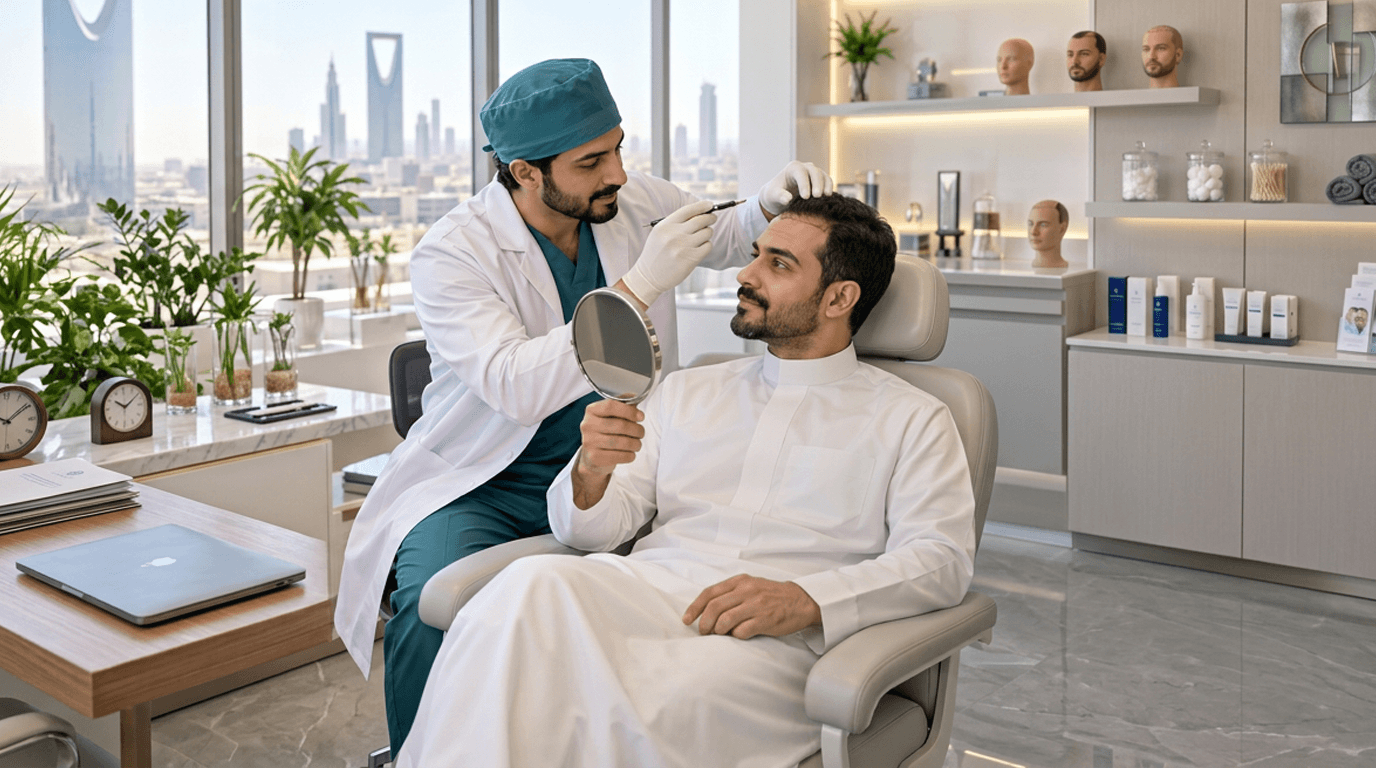
The doctor examines your previous transplant results, donor area, recipient area, scalp condition, and hair growth pattern.
Step 2: Identifying the Main Concerns
The medical team evaluates the reasons behind your unsatisfactory results and determines which corrective options may be appropriate.
Step 3: Personalized Treatment Planning
A treatment plan is developed based on your needs, available donor grafts, scalp condition, and realistic expectations.
Step 4: Performing the Appropriate Procedure
The selected corrective procedure is performed after discussing the treatment plan, potential benefits, and possible limitations.
Step 5: Post-Treatment Follow-Up
Medical follow-up and aftercare instructions help monitor recovery and assess the progress of your results over time.
Why Choose PROF Clinic for Hair Transplant Repair in West Riyadh?
- Individual medical assessment before recommending corrective treatment.
- Personalized treatment planning based on your previous transplant results.
- Focus on natural-looking hairline design and balanced hair distribution.
- Careful evaluation of donor hair availability.
- Medical guidance throughout the treatment and recovery process.
- Clear discussions about realistic outcomes and treatment limitations.
Are You a Candidate for Hair Transplant Repair?
You may benefit from a medical assessment if you:
- Are dissatisfied with the density of your previous hair transplant.
- Have an unnatural or poorly designed hairline.
- Notice irregular hair growth directions.
- Have visible gaps or uneven graft distribution.
- Have scarring following a previous hair restoration procedure.
Your suitability depends on several factors, including the time since your previous surgery, the stability of your results, scalp health, and available donor hair.
Frequently Asked Questions
Can a failed hair transplant be corrected?
Some unsatisfactory hair transplant results can be improved through corrective procedures. However, the available options depend on the underlying problem, scalp condition, and remaining donor hair.
Can an unnatural hairline be corrected?
In selected cases, the appearance of an unnatural hairline may be improved through corrective procedures. The appropriate approach depends on the position of existing grafts and the condition of surrounding tissue.
Can I get additional hair grafts after a previous transplant?
Additional graft placement may be possible if sufficient healthy donor hair is available and your medical assessment confirms suitability.
Does hair transplant repair always require another surgery?
No. Treatment options vary depending on the specific concern. Some patients may require additional transplantation, while others may benefit from different corrective approaches.
When can I undergo a corrective hair transplant?
The appropriate timing depends on healing, scalp condition, and the stability of your previous transplant results. Your doctor will determine the suitable timing following an assessment.
Are the results of hair transplant repair guaranteed?
No medical procedure can guarantee a specific outcome. Corrective procedures can be complex, and the final results depend on individual medical factors and treatment limitations.